Separation anxiety in rescue dogs: what to expect in the first months
Separation-related behavior is very common right after adoption — and often eases over the first six months. How to keep early absences short, when to start training, and when not to wait.
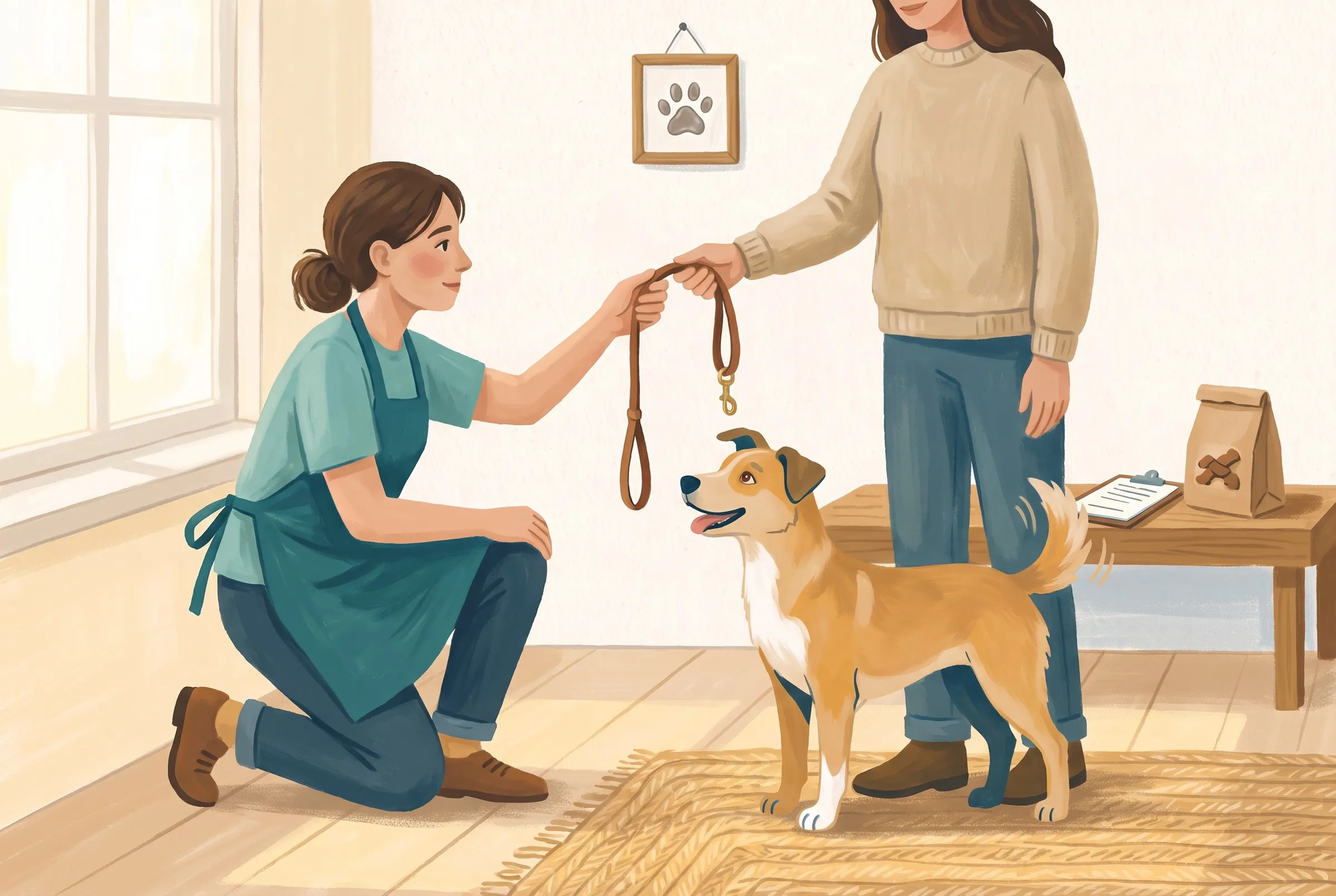
The first weeks with a new dog are a lot — for both of you. If your rescue dog cries, paces or chews the door when you leave, you’re not alone, and it’s often not permanent.
What the research says
Do rescue dogs have more separation anxiety? Welfare organizations report seeing more in shelter dogs (ASPCA), but two careful studies found no difference between dogs from breeders and dogs from rescues (Bradshaw et al., 2002; Dale et al., 2024). The evidence is mixed.
The first weeks
- Arrange company for longer absences while your dog settles — most dogs with separation distress are fine as long as someone is with them (ASPCA).
- Keep routines calm and predictable.
- Don’t punish accidents or damage — it adds fear to the next absence (RSPCA).
Then: teach alone-time gradually
Once your dog has settled, practice short absences below the point of worry and grow them slowly — the approach with the best evidence (Butler et al., 2011).
Free toolThreshold timerTime your dog’s first sign of worry, save each result, and see what your number means.Open the timer →When not to wait
Are you a rescue? We offer a free starter guide for adopters and a partner code that donates 20% of every kit sale to your rescue. See the partner program.
Common questions
Will my rescue dog ever get over separation anxiety?
Many do. In a study that followed adopted dogs for six months, separation-related behavior decreased over that time. But established problems don't always fade by themselves — if it's severe or not easing, get help early.
What is the 3-3-3 rule for rescue dogs?
It's a popular rule of thumb (3 days, 3 weeks, 3 months to settle), not a research finding. The research that exists points the same way in spirit: adjustment takes weeks to months, and separation behavior often eases over the first six months.
Do rescue dogs always have separation anxiety?
No. Welfare organizations report more separation problems in shelter dogs, but two careful studies found no difference between dogs from breeders and dogs from rescues.
Stop guessing how long to leave your dog.
An 82-page illustrated guide, a fillable workbook, an Excel tracker that tells you what to do after every session, and a one-page card for the fridge. 111 cited sources.