Separation anxiety in older dogs: why it starts late, and what to do
A dog who coped for years and suddenly can't be left needs a vet first — pain, urinary problems and cognitive decline can all look like separation anxiety. Then the same gentle plan still works.
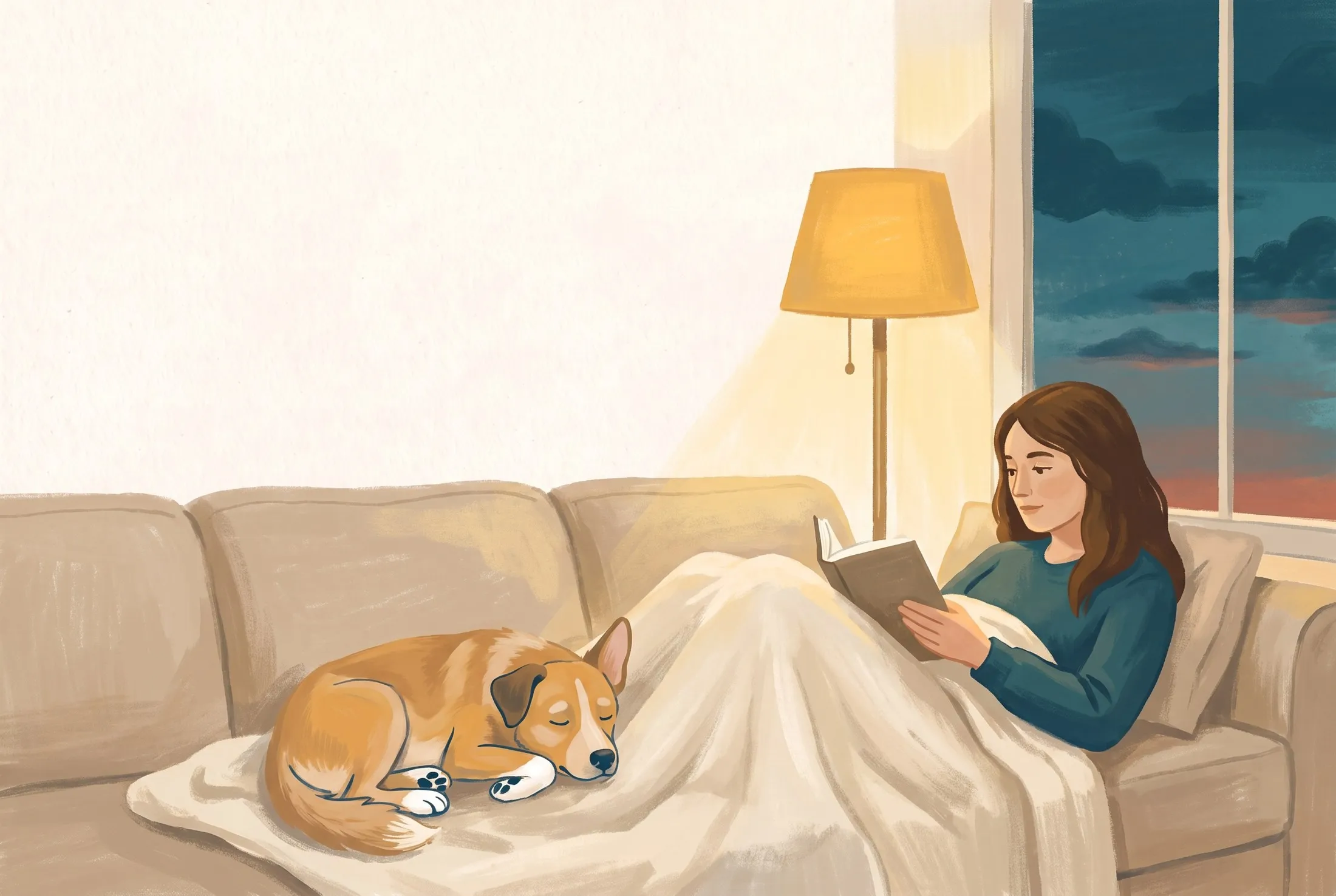
Your dog coped for years. Now, suddenly, they bark when you leave, or you come home to accidents. It’s more common than you might think — and the first step is not training.
Vet first — always
Pain matters more than most people realize: in a review of 100 behavior-referral cases, about a third involved a painful condition by a conservative estimate (Mills et al., 2020). And in one comparison, dogs whose noise sensitivity turned out to be linked to painful joints responded well once the pain was treated (Lopes et al., 2018).
Take to the vet: a short video of your dog alone, notes on when the change began, any changes in drinking, toileting, sleep or mobility, and any medications.
Then: the same plan, adapted
- Find your dog’s current number with a filmed test.
- Practice short, calm absences below it; grow them slowly.
- Keep sessions gentle and short for tired or stiff dogs.
- Arrange company for longer absences while you train.
- Keep routines predictable — sudden changes in time alone are a known trigger (Harvey et al., 2022).
Common questions
Why does my old dog suddenly have separation anxiety?
Late-onset separation problems are common, but a sudden change calls for a vet visit first. Pain, urinary problems and cognitive decline can bring new anxiety or mimic separation anxiety. Once medical causes are addressed, behavioral treatment still works for older dogs.
Is senior dog anxiety worse at night?
Some older dogs become more anxious or restless at night. Changes in sleep, confusion or new night-time restlessness are worth raising with your vet, as they can be linked to cognitive decline or discomfort.
Stop guessing how long to leave your dog.
An 82-page illustrated guide, a fillable workbook, an Excel tracker that tells you what to do after every session, and a one-page card for the fridge. 111 cited sources.