Puppy separation anxiety: what's normal, and how to prevent problems
Most puppies protest being left at first. What the research says about crates, sleep, punishment and pheromones — and how to teach a puppy that being alone is safe, one tiny step at a time.
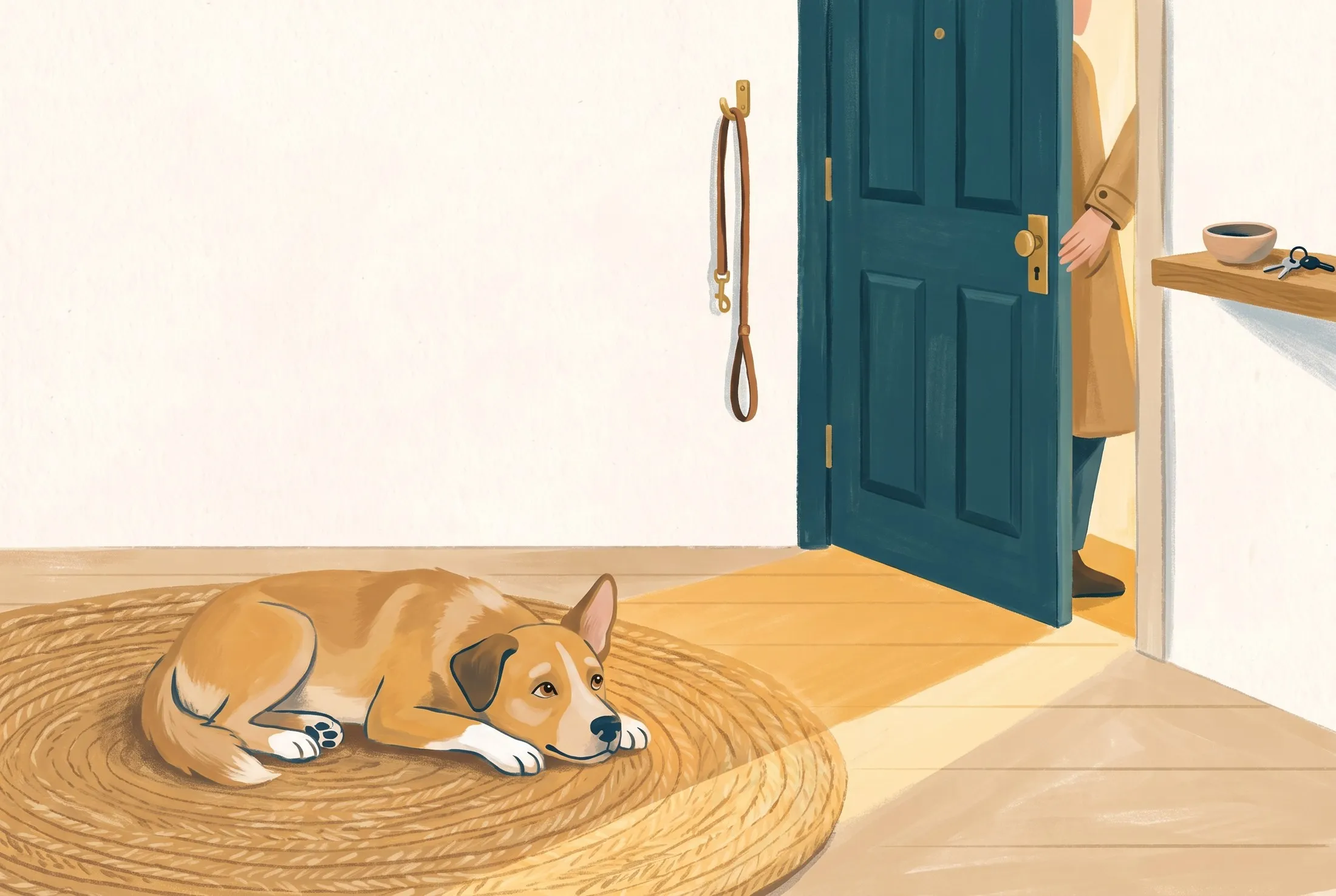
Almost every puppy protests being left at first. The good news: puppyhood is the easiest time to teach that being alone is safe — and a few research findings tell you what helps.
What’s normal
What the research links to fewer problems
How to teach a puppy to be alone
- Start small. A step away, then a few seconds behind a baby gate or inside door, back before your puppy fusses.
- Grow it slowly — only while your puppy stays relaxed.
- Keep comings and goings calm. Not cold, not a fuss.
- Never punish — it’s linked to more separation problems, not fewer (Dale et al., 2024).
- A settled sleep routine in a crate or room your puppy is comfortable in.
Where pheromones actually have evidence
For most dogs, calming pheromones have weak evidence. But in newly adopted puppies, a pheromone collar reduced crying when they were left alone in one well-controlled trial (Gaultier et al., 2008) — one of the few places they may genuinely help.
Keep going through adolescence
Professionals who treat separation problems have highlighted adolescence as an under-explored factor (Almquist et al., 2026) — a reasonable prompt to keep practicing alone-time even if puppyhood went smoothly.
Free toolThreshold timerTime your dog’s first sign of worry, save each result, and see what your number means.Open the timer →Common questions
At what age do puppies grow out of separation anxiety?
There's no reliable age. Many puppies protest at first, and a socially varied life between 6 and 12 months was linked to not developing separation problems later. But established problems don't reliably fade on their own — teach alone-time gradually from the start.
How do you break separation anxiety in puppies?
Start with tiny distances — stepping a short way away while your puppy stays calm, then returning — and build up gradually. Keep hellos and goodbyes calm, never punish, and avoid leaving your puppy alone for longer than they can cope with.
Is it normal for a puppy to cry when I leave the room?
Some protest is common at first. What matters is the trend: with small, calm practice absences it should ease. If it's getting worse, or your puppy panics, talk to your vet.
Stop guessing how long to leave your dog.
An 82-page illustrated guide, a fillable workbook, an Excel tracker that tells you what to do after every session, and a one-page card for the fridge. 111 cited sources.